
Latest Posts
- For All the Marbles: Meaning, Origin, Examples, and How to Use This Popular English Idiom Correctly
 English is full of colorful expressions that make conversations more vivid and engaging. Rather than saying exactly what we mean, we often … Read more
- Worn vs Warn: Understanding the Difference With Examples, Writing Tips, and Usage Rules
 Language becomes powerful when every word carries the right meaning. Whether you are a student writing an essay, a professional creating content, … Read more
- Is Summer Capitalized? A Complete Guide to Capitalization Rules in English Writing
 Capitalization is one of the first grammar rules English learners study, yet it continues to confuse students, writers, bloggers, and even experienced … Read more
- Let One’s Hair Down: Meaning, Origin, Uses, Examples, and How to Use This Popular English Idiom Naturally
 English is full of colorful idioms that make conversations more expressive and engaging. Instead of speaking literally all the time, native speakers … Read more
- Nregister vs Deregister: Meaning, Differences, Usage, and Examples for Better English Writing
 Words are the building blocks of communication. The way we choose, compare, and apply words can completely change how clearly we express … Read more
- Predicate Nominative: The Complete Guide to Subject Complements, Grammar Rules, and Sentence Examples
 Learning English grammar can feel overwhelming at first, especially when you encounter terms that sound technical. One of these is the predicate … Read more
- City vs Town vs Village: Understanding the Differences, Meanings, and Usage in Writing
 Words are more than simple tools for sharing information. They help us create images, express emotions, describe experiences, and connect with readers. … Read more
- Alright vs All Right
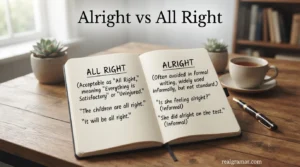 Great writing is not only about using advanced vocabulary or complicated sentences. Often, the smallest word choices create the biggest impact. A … Read more
- Ingrained vs Engrained
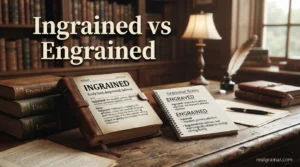 Words are more than simple tools for sharing information. They create images, express emotions, and help readers understand ideas beyond their literal … Read more
- Hastle vs Hassle: Meaning, Differences, Examples, and Common Usage Mistakes
 Language becomes powerful when writers understand the small differences between similar-looking words. Figurative language, precise vocabulary, and descriptive expression allow writers to … Read more
- Indolence vs Insolence: Meaning, Differences, Examples, and How to Use These Words Correctly
 Words are the building blocks of communication, but choosing the right word can completely change the meaning, emotion, and impact of a … Read more
- Comma Before or After
 Good writing is not only about choosing impressive words; it is also about organizing ideas clearly. A single punctuation mark can change … Read more
- Imbed vs Embed: Meaning, Differences, Correct Usage, and Sentence Examples
 Words are powerful tools. The way we choose and use them can influence how clearly we express ideas, emotions, and information. In … Read more
- Gluing vs Glueing: Meaning, Correct Usage, Examples, and Common English Mistakes
 Language is more than a collection of words; it is a tool for expressing ideas, emotions, and experiences with clarity. The right … Read more
- Predicate Nominative: The Complete Guide to Subject Complements, Grammar Rules, and Sentence Examples
 Learning English grammar can feel overwhelming at first, especially when you encounter terms that sound technical. One of these is the predicate … Read more