

English is full of expressions that seem confusing at first glance. Some phrases appear to contradict themselves, yet native speakers use them naturally in everyday conversations. One such expression is same difference. If you’ve ever heard someone respond with this phrase during an argument or casual discussion, you may have wondered whether it actually makes sense.
Despite sounding contradictory, this expression has a well-established meaning in modern English. It is commonly used in informal speech to suggest that two choices, situations, or opinions have no meaningful distinction, even if they are technically different. Depending on the speaker’s tone, it can be humorous, sarcastic, dismissive, or simply practical.
Understanding this expression helps students, English learners, writers, and professionals interpret conversations more accurately. It also improves listening comprehension, vocabulary, and cultural awareness because the phrase often carries emotional meaning beyond its literal words.
In this guide, you’ll learn what the expression means, where it came from, when to use it, when to avoid it, common mistakes, real-life examples, and similar expressions that native English speakers frequently use.
What Does This Expression Mean?
The phrase means that two things may have small technical differences, but those differences are not important in the current situation.
In other words, someone is saying:
- It doesn’t really matter.
- The result is practically identical.
- The distinction isn’t significant.
- Both options lead to the same outcome.
Simple Definition
Two things are technically different but practically equal for the purpose being discussed.
For example:
Person A: Should we leave at 7:55 or 8:00?
Person B: Same difference.
The speaker means those five minutes are not important.
Why Does It Sound Contradictory?
At first glance, the words seem impossible together.
- Same means identical.
- Difference means not identical.
Putting them together creates what appears to be a contradiction.
However, English often uses apparently contradictory expressions for emphasis.
The phrase communicates that although a difference exists, it is so small that it can safely be ignored.
This makes it an example of conversational irony rather than literal grammar.
The Real Meaning in Everyday English
Native speakers often use this expression to simplify conversations.
Instead of explaining why two options are nearly identical, they simply say the phrase to indicate that the distinction is insignificant.
Common situations include:
- Comparing products
- Choosing restaurants
- Discussing prices
- Planning schedules
- Debating minor details
- Comparing brands
- Talking about sports
- Everyday family conversations
Common Situations Where People Use It
1. Small Time Differences
Examples:
- Five minutes earlier?
- Five minutes later?
- Same difference.
2. Similar Prices
Example:
One laptop costs $995.
Another costs $1,000.
Many shoppers might say the price is practically the same.
3. Nearly Identical Products
Imagine choosing between two bottles of water from different brands.
If both taste similar and cost nearly the same, someone may consider them effectively equivalent.
4. Everyday Decisions
Examples:
- Walking instead of taking the elevator.
- Taking one street instead of another nearby road.
- Buying one notebook instead of another with identical features.
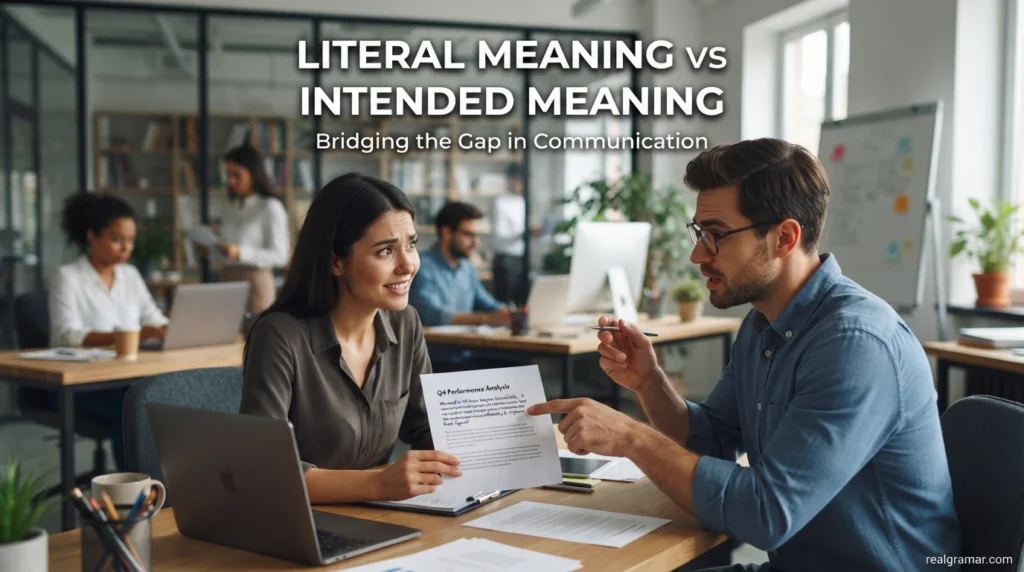
Literal Meaning vs Intended Meaning
| Literal Interpretation | Intended Meaning |
| The words contradict each other. | The difference isn’t important. |
| Same means identical. | Nearly identical in practice. |
| Difference means not identical. | Small distinction can be ignored. |
| Logical contradiction. | Practical communication shortcut. |
This difference between literal and intended meaning is common in spoken English.
Origin of the Expression
Although the exact origin is uncertain, linguists generally agree that the expression developed in informal American English during the twentieth century.
Its popularity increased because speakers wanted a short, memorable way to dismiss insignificant distinctions.
Today it appears in:
- Casual conversations
- Television dialogue
- Movies
- Comedy
- Social media
- Blogs
- Informal writing
It is much less common in formal academic or business writing.
Why Native Speakers Use It
The expression saves time.
Instead of saying:
“Although these options have minor distinctions, those distinctions do not affect our decision.”
People simply say:
Same difference.
It also adds personality to conversations.
Depending on tone, it can sound:
- Humorous
- Relaxed
- Friendly
- Slightly sarcastic
- Dismissive
- Confident
Different Meanings Based on Tone
Tone completely changes how listeners interpret the phrase.
Neutral
Used simply to indicate that two choices are practically equal.
Example:
“The blue folder or the green folder?”
“Same difference.”
Humorous
Friends often use it jokingly.
Example:
“You spent $99 instead of $100.”
“Same difference.”
Everyone understands the joke.
Sarcastic
Sometimes speakers use it to show they believe another person’s argument is unnecessary.
Example:
Person A:
“It’s only three seconds slower.”
Person B:
“Same difference.”
The speaker suggests the distinction is meaningless.
Dismissive
Occasionally, the phrase may sound rude if someone ignores another person’s valid point.
Example:
Customer:
“This model has fewer safety features.”
Salesperson:
“Same difference.”
In this case, the response would be inappropriate because the distinction actually matters.
Similar Expressions
English has several expressions with nearly the same meaning.
These include:
- It doesn’t matter.
- Close enough.
- Six of one, half a dozen of the other.
- Tomato, tomahto.
- Practically the same.
- More or less identical.
- Virtually the same.
- Nearly equivalent.
Each expression carries slightly different shades of meaning, but all communicate that differences are insignificant.
Why Understanding This Expression Improves English
Learning idiomatic expressions helps English learners go beyond textbook grammar.
Benefits include:
- Better listening comprehension
- More natural conversations
- Improved cultural understanding
- Stronger vocabulary
- Greater confidence with native speakers
- Better reading comprehension
- More authentic writing
Recognizing these expressions also helps you understand movies, TV shows, podcasts, and social media conversations.
Part 2 will cover:
- When to use and when to avoid the expression
- Formal vs informal usage
- Real-life examples
- Common mistakes
- Related idioms and comparisons
- Practical writing tips
- 8 search-intent
When Should You Use This Expression?
This phrase works best in informal communication when two options are so similar that choosing between them makes little practical difference. It helps keep conversations natural and concise, especially when discussing everyday situations.
Appropriate situations include:
- Comparing similar products
- Talking about nearly identical prices
- Discussing small differences in time
- Friendly conversations
- Lighthearted debates
- Casual text messages
- Social media comments
- Informal workplace conversations (when appropriate)
Examples
Friends planning dinner
Alex: Should we order pizza or burgers?
Jamie: Same difference—we’re just looking for something quick.
Shopping
Customer: This shirt is $39.99, and that one is $40.
Friend: Same difference. Buy the one you like better.
Travel
Traveler: Should we leave at 8:00 or 8:05?
Companion: Same difference. We’ll still arrive on time.
When Should You Avoid Using It?
Although the expression is common, there are situations where it may sound careless, dismissive, or even insensitive.
Avoid using it when the differences actually matter.
Examples of situations where it is inappropriate:
- Medical advice
- Legal documents
- Financial decisions
- Academic writing
- Scientific discussions
- Safety instructions
- Technical manuals
- Customer complaints involving important details
Example
❌ Incorrect
Customer: “This product has a one-year warranty, while this one has a five-year warranty.”
Salesperson: “Same difference.”
The warranty difference is significant, so the response would be misleading.
Better Response
“Although the products are similar, the warranty periods are quite different.”
Formal vs. Informal Usage
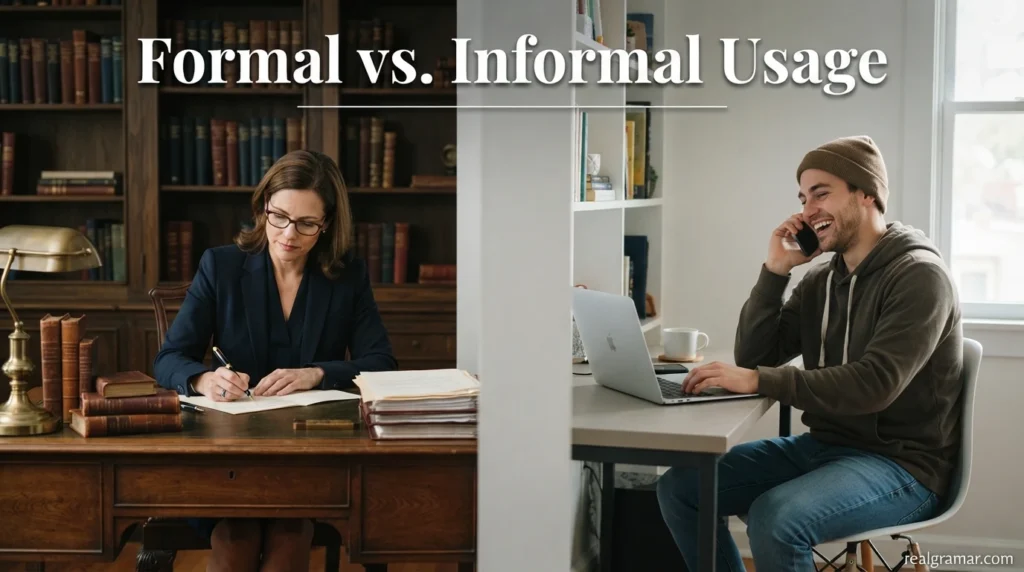
This expression belongs mainly to spoken and informal written English. While it is widely understood, it is generally not suitable for formal reports, research papers, or professional documentation.
| Context | Appropriate? | Example |
| Casual conversation | ✅ Yes | “It’s five dollars more—same difference.” |
| Text messages | ✅ Yes | “We’ll meet at six or six-thirty. Same difference.” |
| Social media | ✅ Yes | Common in humorous posts |
| Business meeting | ⚠️ Sometimes | Only in relaxed settings |
| Academic essay | ❌ No | Use “the distinction is insignificant” instead |
| Scientific report | ❌ No | Precision is required |
Real-Life ExamplesSeeing the expression in context makes it easier to understand its meaning.
Example 1: Grocery Shopping
Emma: Which cereal should we buy?
Liam: They’re almost identical.
Emma: Same difference. Pick whichever is cheaper.
Example 2: Choosing a Movie
Friend 1: Should we watch the original or the remake?
Friend 2: Same difference. Both have good reviews.
Example 3: Office Conversation
Employee: Should I send the report today or tomorrow morning?
Manager: Tomorrow morning is fine.
Employee: So today or tomorrow?
Manager: Same difference, as long as it’s before the meeting.
Example 4: Sports
Fan 1: Our team won by one point instead of two.
Fan 2: Same difference—a win is a win.
Example 5: Cooking
Cook: Should I use salted or unsalted butter?
Friend: For this recipe, same difference.
(In reality, some recipes do require one over the other, so context matters.)
Common Mistakes English Learners Make
Because this expression is idiomatic, learners sometimes misunderstand or misuse it.
1. Taking It Literally
Many learners think the phrase is grammatically incorrect because the words seem to contradict each other.
In reality, it is an accepted idiomatic expression whose meaning is understood through context.
2. Using It in Formal Writing
Incorrect:
The two research methods show the same difference.
Correct:
The differences between the two research methods are negligible.
Formal writing requires precise language rather than conversational idioms.
3. Using It When Differences Matter
Avoid using the expression when discussing:
- Health conditions
- Legal rights
- Money
- Contracts
- Safety procedures
- Technical specifications
Accuracy should always come before convenience.
4. Assuming It Means “Exactly the Same”
The expression does not mean two things are completely identical.
Instead, it means any differences are too small to affect the outcome or decision.
Related Expressions and Their Meanings
Learning similar idioms helps expand your vocabulary and understand native speakers more easily.
| Expression | Meaning | Example |
| Close enough | Accurate enough for the purpose | “It’s close enough.” |
| Six of one, half a dozen of the other | Two choices are effectively equal | “Either restaurant is fine.” |
| Tomato, tomahto | Different names for the same thing | “Call it what you want.” |
| It makes no difference | The outcome remains the same | “Choose whichever you prefer.” |
| Practically identical | Almost exactly the same | “The two versions are practically identical.” |
Benefits of Understanding Idiomatic Expressions
Idioms are an important part of fluent English because they help speakers communicate naturally and efficiently.
Benefits include:
- Improved listening comprehension
- Better conversational skills
- Stronger vocabulary
- Greater confidence with native speakers
- More natural writing
- Better understanding of films, podcasts, and books
- Improved cultural awareness
Learning idioms also helps you recognize meaning that cannot always be understood by translating individual words.
Tips for Using This Expression Naturally
To sound more like a native English speaker, keep these tips in mind:
- Use it only in informal settings.
- Make sure the differences are genuinely minor.
- Pay attention to your tone, as it can sound humorous or dismissive.
- Avoid using it in situations requiring precision.
- Consider your audience before using conversational idioms.
FAQs
1. Is this expression grammatically correct?
Yes. Although the words appear contradictory, it is a well-established idiomatic expression in modern English.
2. Does it mean two things are exactly the same?
No. It means the differences are so small that they are not important in the current situation.
3. Can I use it in academic writing?
No. Academic and professional writing generally requires more precise language, such as “the distinction is negligible” or “the differences are insignificant.”
4. Is it rude?
Not necessarily. It depends on the speaker’s tone and the context. It can sound friendly, humorous, sarcastic, or dismissive.
5. Is it common in everyday English?
Yes. Native speakers frequently use it in casual conversations, especially when discussing choices or minor distinctions.
6. What are some formal alternatives?
Formal alternatives include:
- The distinction is insignificant.
- The difference is negligible.
- The two options are functionally equivalent.
- The outcome remains the same.
7. Can it be used in business conversations?
Yes, but only in informal discussions where the differences truly do not affect the decision. Avoid it in official documents or presentations.
8. Why is it considered an idiom?
Because its overall meaning cannot be understood simply by interpreting the individual words. Like many English idioms, it has a figurative meaning that differs from its literal interpretation.
Conclusion
Although same difference may sound contradictory at first, it is a widely recognized English idiom used to express that two things, while technically different, are practically equivalent for the situation being discussed. Its meaning depends on context, tone, and the importance of the distinction involved.
Understanding this expression helps English learners interpret conversations more naturally, improves vocabulary, and builds confidence in both speaking and listening. It also highlights an important feature of English: not every phrase should be interpreted literally. Many common expressions rely on shared cultural understanding and figurative meaning.
Use this idiom in casual conversations when minor differences do not affect the outcome, but avoid it in formal, academic, legal, or technical contexts where precision is essential. By mastering expressions like this, you’ll develop a more natural command of English and communicate with greater fluency and confidence.
