
Learning English becomes much easier when you understand words that look or sound similar but have completely different meanings. These words often confuse students, writers, and even native speakers because a small spelling change can completely alter a sentence’s meaning.
One excellent example is savor and saver. Although they differ by only one letter, they belong to different parts of speech, express different ideas, and are used in entirely different situations.
Understanding this distinction doesn’t just improve grammar—it also strengthens your writing skills. When you choose the right word, your sentences become clearer, more descriptive, and more engaging. Whether you’re writing essays, creative stories, poems, emails, or social media captions, accurate vocabulary helps readers understand your message effortlessly.
Figurative language also plays an important role in effective communication. It allows writers to paint vivid pictures, express emotions, create memorable comparisons, and make ideas more interesting. Mastering vocabulary alongside literary devices such as metaphors, similes, symbolism, and imagery can significantly improve both academic and creative writing.
This guide explains everything you need to know about savor and saver, including meanings, pronunciation, grammar, examples, common mistakes, comparison tables, writing tips, figurative usage, exercises, and frequently asked questions.
What Do “Savor” and “Saver” Mean?
Although these words sound similar, they perform entirely different functions.
| Word | Part of Speech | Meaning | Example |
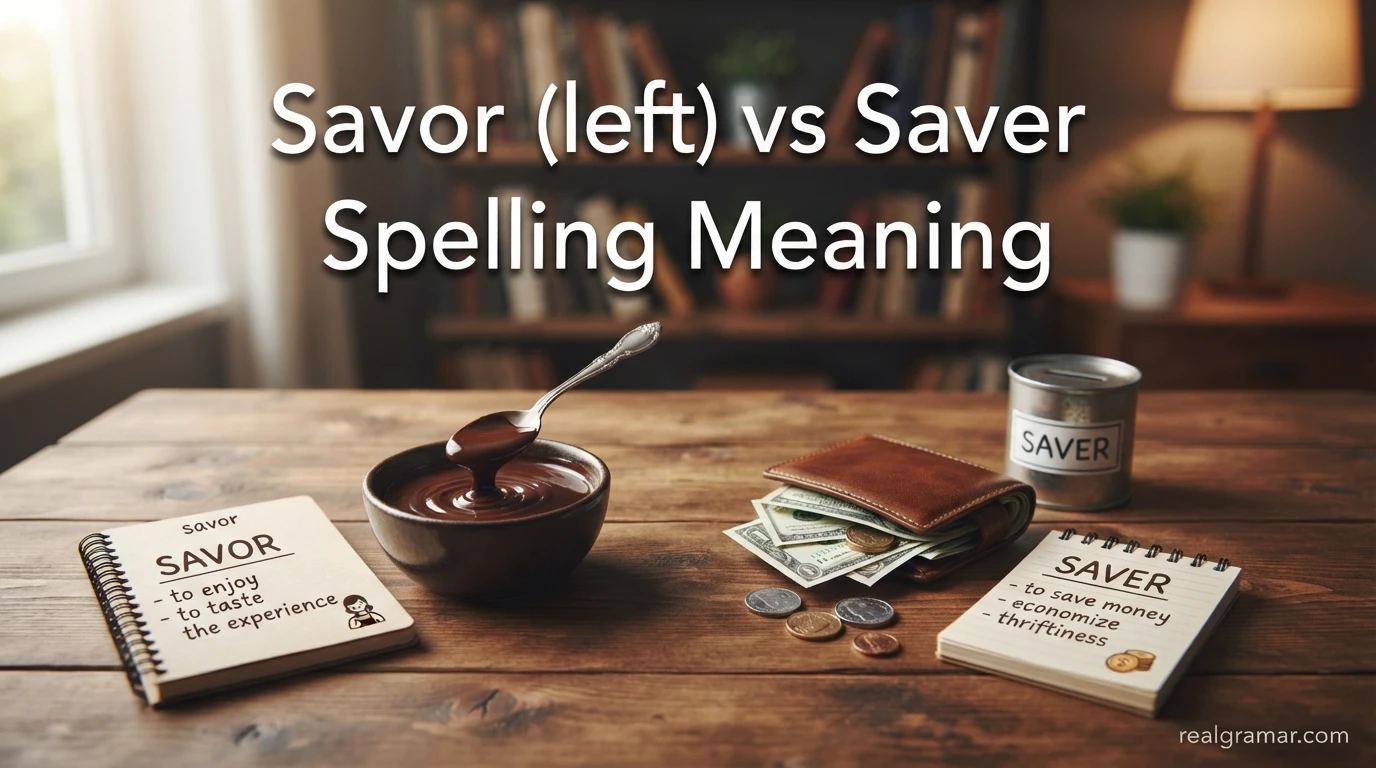
| Savor | Verb / Noun | To enjoy something completely or appreciate it deeply | Savor every moment. |
| Saver | Noun | A person or thing that saves money, time, effort, or something valuable | She’s a careful saver. |
The easiest way to remember them is:
- Savor = Enjoy
- Saver = Save
One expresses appreciation.
The other expresses preservation.
Understanding “Savor”
The word savor usually means to enjoy something slowly and completely.
It often refers to:
- Food
- Experiences
- Emotions
- Success
- Beautiful memories
- Peaceful moments
Instead of rushing through something, you take time to appreciate it.
Examples
- Savor every bite of your meal.
- She savored the beautiful sunset.
- We savored our vacation together.
- He savored his victory after years of hard work.
- They savored every conversation with their grandparents.
Notice that these examples involve enjoyment rather than saving something.
Understanding “Saver”
A saver is someone or something that saves.
The word commonly appears in discussions about:
- Money
- Time
- Energy
- Resources
- Storage
- Safety
Examples
- He’s a careful saver of money.
- This appliance is a huge energy saver.
- The new software is a time saver.
- Coupon users are often excellent savers.
- Automatic deposits help every saver build wealth.
Unlike savor, this word has nothing to do with enjoyment.
Quick Comparison Table

| Feature | Savor | Saver |
| Meaning | Enjoy deeply | Someone or something that saves |
| Part of Speech | Verb, noun | Noun |
| Related Word | Enjoy | Save |
| Common Topics | Food, memories, emotions | Money, energy, time |
| Emotional Meaning | Yes | Usually no |
| Used in Creative Writing | Frequently | Occasionally |
| Figurative Use | Very common | Rare |
Pronunciation and Spelling Differences
These words look almost identical.
Savor
Pronunciation:
SAY-ver
Spelling:
S-A-V-O-R
Notice the letter O before the final R.
Saver
Pronunciation:
SAY-ver
Spelling:
S-A-V-E-R
Notice the letter E before the final R.
Although pronunciation is nearly identical in everyday speech, spelling determines the meaning.
When to Use “Savor”
Use savor whenever you’re talking about appreciating or enjoying something.
Appropriate Situations
- Meals
- Vacations
- Friendships
- Music
- Success
- Memories
- Nature
- Quiet moments
- Celebrations
- Personal achievements
Sentence Examples
- Savor every opportunity to learn.
- She savored the smell of fresh coffee.
- We savored the peaceful evening.
- The audience savored every note of the concert.
- They savored their final day together.
- I like to savor good books.
- He savored every compliment.
- Travelers should savor local culture.
- She savored her graduation ceremony.
- The family savored every holiday tradition.
When to Use “Saver”
Use saver whenever you’re referring to preserving something valuable.
Common Contexts
- Saving money
- Saving time
- Conserving energy
- Financial planning
- Helpful products
- Productivity
- Household devices
Sentence Examples
- He’s a disciplined saver.
- This app is a real time saver.
- LED lights are energy savers.
- Automatic budgeting helps every saver.
- Cloud storage can be a lifesaver and a space saver.
- She became an excellent saver after college.
- Every saver benefits from planning.
- Coupons make shoppers smarter savers.
- Water-saving technology helps every saver.
- This shortcut is a huge effort saver.
Figurative Language and Creative Writing
One reason savor appears so often in literature is its ability to create vivid imagery.
Instead of saying:
Enjoy the moment.
A writer may say:
Savor the moment like the final note of a beautiful song.
This sentence creates emotion, imagery, and atmosphere.
Why Writers Choose “Savor”
It encourages readers to:
- Slow down
- Imagine details
- Feel emotions
- Connect with experiences
That makes writing richer and more memorable.
Simile Examples
Similes compare two things using like or as.
Examples:
- She savored the silence like a rare treasure.
- He savored success like a child opening presents.
- The memory lingered like sweet music.
- She protected her dreams like precious jewels.
- Time slipped away like falling leaves.
These comparisons create stronger mental images.
Metaphor Examples
Metaphors compare without using like or as.
Examples:
- Memories are golden threads.
- Hope is a lighthouse.
- Her smile was sunshine.
- His determination became an unbreakable bridge.
- Every achievement was another stepping stone.
Metaphors make descriptive writing more engaging.
Idioms and Poetic Expression
English includes many expressions related to appreciation.
Examples include:
- Stop and smell the roses.
- Treasure every moment.
- Live in the moment.
- Count your blessings.
- Enjoy life’s little pleasures.
These idioms communicate ideas beyond their literal meanings.
Poetic Sentences
- Savor each sunrise before the day unfolds.
- Every memory blooms like spring flowers.
- Happiness whispers to those who pause.
- Time dances through grateful hearts.
- Every smile leaves footprints on the soul.
These examples demonstrate how figurative language strengthens emotional writing.
Using These Words in Different Writing Styles

Academic Writing
Correct:
- Students should savor opportunities to learn from feedback.
- Every saver benefits from financial literacy education.
Avoid mixing the meanings.
Creative Writing
- She savored the warmth of childhood memories.
- Every sunset became a chapter worth savoring.
Creative writing often uses imagery and emotional language.
Business Writing
- The software is a major time saver.
- Our budgeting tool helps every saver reach financial goals.
Business writing prefers precise meanings.
Everyday Conversation
- Savor your dessert.
- He’s a great saver.
- This shortcut saves time.
- Enjoy the experience.
- She’s careful with money.
Common Mistakes Students Make
Mistake 1
❌ I’m a good savor of money.
✅ I’m a good saver of money.
Mistake 2
❌ Saver every moment.
✅ Savor every moment.
Mistake 3
❌ This meal is a saver.
✅ This meal is something to savor.
Mistake 4
❌ She savored money carefully.
✅ She saved money carefully.
Mistake 5
❌ He’s a professional savor.
✅ He’s a professional chef who encourages guests to savor every bite.
Vocabulary Enhancement Tips
Expanding your vocabulary helps you write with greater precision.
Words Related to Savor
- Appreciate
- Enjoy
- Relish
- Cherish
- Treasure
- Delight in
- Value
- Admire
- Celebrate
- Embrace
Words Related to Saver
- Protector
- Preserver
- Conservator
- Planner
- Investor
- Budgeter
- Collector
- Economist
- Guardian
- Contributor
Learning related vocabulary makes your writing more varied and expressive.
Descriptive Language Examples
Instead of:
The cake tasted good.
Write:
- I savored every rich, chocolate-filled bite.
- The warm aroma filled the kitchen with comfort.
- Each slice melted softly on my tongue.
Instead of:
He saves money.
Write:
- He’s a disciplined saver who carefully plans every expense.
- Every purchase reflects thoughtful budgeting.
- His financial habits inspire others.
Descriptive language helps readers visualize ideas more clearly.
Practice Exercises
Exercise 1
Choose the correct word.
- She wanted to _____ every memory.
- He’s a careful _____.
- This tool is a time _____.
- We should _____ our vacation.
- She’s becoming a better money _____.
Answers
- savor
- saver
- saver
- savor
- saver
Exercise 2
Correct the sentence.
- I’m a good savor of money.
- Saver every bite.
- This machine helps you savor electricity.
- She is an excellent savor.
- We saver our vacation.
Correct Answers
- I’m a good saver of money.
- Savor every bite.
- This machine helps you save electricity.
- She is an excellent saver.
- We savored our vacation.
Memory Tricks to Never Confuse Them Again

Try these simple reminders:
Think of the Letter O
SavOr = enjOy
Both contain the letter O.
Think of the Letter E
SavEr = savE
Both contain the letter E.
This small spelling clue makes remembering the difference much easier.
When to Avoid Each Word
Avoid savor when discussing:
- Banking
- Financial planning
- Saving electricity
- Conserving water
- Budgeting
Avoid saver when discussing:
- Delicious food
- Beautiful scenery
- Emotional moments
- Happy memories
- Artistic experiences
Choosing the correct word ensures your message remains clear and professional.
Why This Difference Matters
Using precise vocabulary demonstrates strong language skills.
Correct word choice improves:
- Essay writing
- Storytelling
- Professional communication
- Academic performance
- Reading comprehension
- Public speaking
- Creative expression
- Vocabulary development
Whether you’re preparing for exams, writing novels, composing poems, or creating business documents, understanding subtle spelling differences helps build confidence and credibility.
FAQs
1. Is “savor” the same as “save”?
No. Savor means to enjoy something deeply, while save means to preserve or keep something for later use.
2. Can “saver” be used as a verb?
No. Saver is a noun. The verb form is save.
3. Is “savor” commonly used in creative writing?
Yes. Writers frequently use it to express appreciation, emotion, sensory details, and vivid imagery.
4. How can I remember the difference?
Remember:
- SavOr = enjOy
- SavEr = savE
The matching letters provide an easy memory aid.
5. Which word appears more often in literature?
Savor appears more frequently in poetry, novels, memoirs, and descriptive writing because it creates emotional depth and sensory imagery.
Conclusion
Although savor and saver differ by only one letter, they serve completely different purposes in English. Savor expresses appreciation, enjoyment, and emotional experience, making it a favorite in descriptive and creative writing. Saver, on the other hand, refers to someone or something that conserves money, time, energy, or other valuable resources, making it common in everyday conversation, finance, and practical contexts.
Understanding their meanings, grammatical roles, and appropriate contexts helps you avoid common mistakes and communicate with greater accuracy. Combined with figurative language, descriptive vocabulary, similes, metaphors, idioms, and other literary devices, choosing the right word can transform ordinary sentences into engaging, expressive writing. Whether you’re a student, writer, or English learner, mastering distinctions like these strengthens your vocabulary, boosts confidence, and makes every piece of writing clearer, more polished, and more impactful.
