Introduction
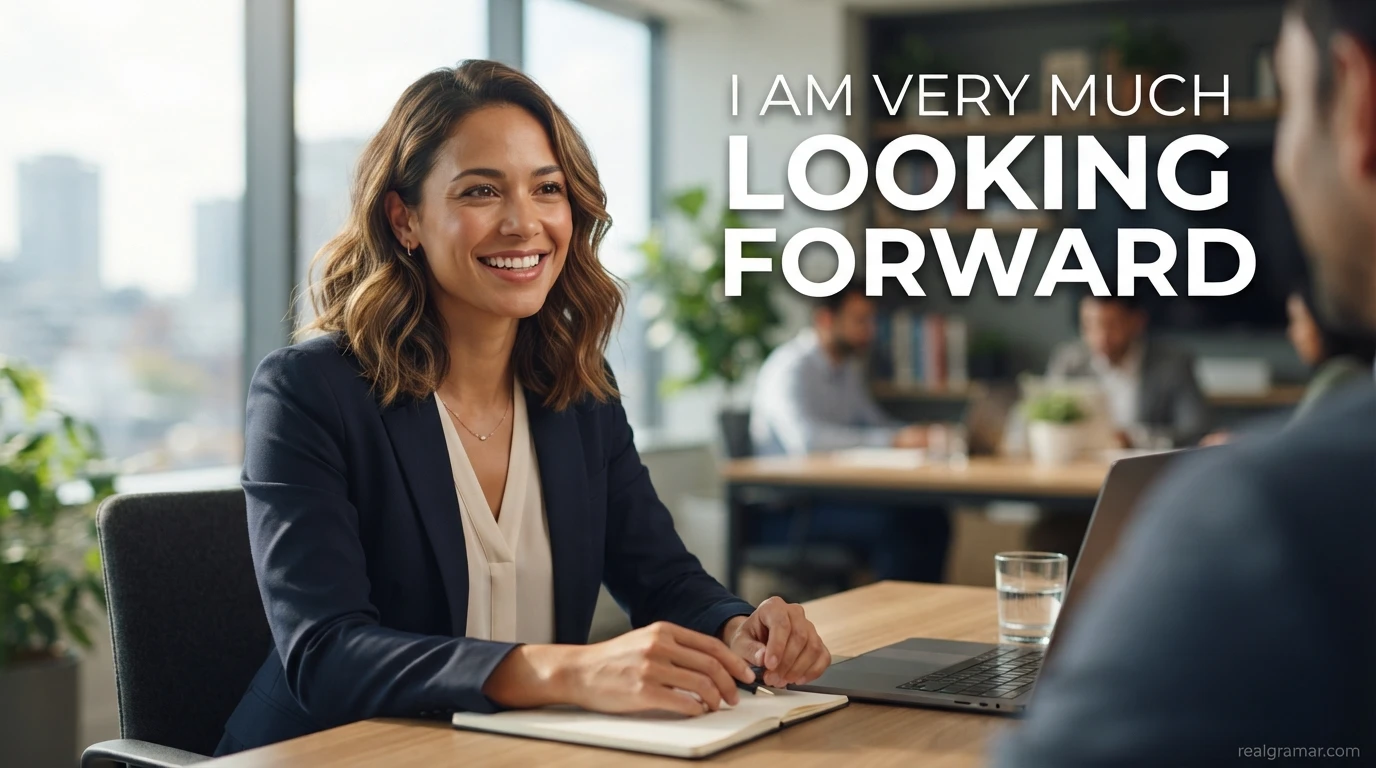
Whether you’re writing a professional email, sending a friendly message, or preparing for an important interview, expressing anticipation politely is an essential communication skill. Many English learners and even native speakers wonder whether phrases like “I am very much looking forward” sound natural, are grammatically correct, or should be replaced with a more polished alternative.
The search intent behind this topic is informational. People usually want to know:
- Is this expression grammatically correct?
- When should it be used?
- Is it formal or informal?
- What are better alternatives in emails and business writing?
- What common mistakes should be avoided?
The good news is that this expression is perfectly acceptable when used correctly. However, understanding its grammar, tone, and context helps you write more naturally and professionally.
This guide explains everything you need to know, including meanings, sentence structures, examples, formal alternatives, common errors, and practical writing tips.
What Does This Expression Mean?
This phrase expresses strong anticipation, excitement, or eagerness about a future event.
It tells the reader that you are genuinely excited about something that has not happened yet.
For example:
- I am very much looking forward to meeting you.
- We are excited about the upcoming conference.
- She can’t wait to begin her new job.
Although these sentences vary in wording, they all communicate positive expectation.
Simple Definition
It means:
- feeling excited about something in the future
- eagerly waiting for an event
- expecting something with enthusiasm
- expressing sincere anticipation
Is It Grammatically Correct?
Yes.
The expression follows standard English grammar.
It consists of:
| Part | Function |
| I | Subject |
| am | Auxiliary verb |
| looking | Present participle |
| forward | Adverb |
| to | Preposition |
| noun or verb + ing | Object of the preposition |
The important grammar rule is that “to” is a preposition, not an infinitive marker.
That means it must be followed by:
- a noun
- a pronoun
- or a gerund (verb + ing)
Correct:
- looking forward to meeting you
- looking forward to hearing from you
- looking forward to working together
- looking forward to your reply
Incorrect:
- looking forward to meet you
- looking forward to hear from you
- looking forward to work together
Why Do People Add “Very Much”?
Adding “very much” simply emphasizes enthusiasm.
Compare these sentences:
- I am looking forward to our meeting.
- I am really looking forward to our meeting.
- I am very much looking forward to our meeting.
All three are correct.
The last sentence sounds slightly stronger and more enthusiastic.
It is especially common in:
- business emails
- interview follow-ups
- formal invitations
- thank-you messages
- academic correspondence
When Should You Use This Expression?
This phrase works whenever you want to communicate positive anticipation.
Common situations include:
Professional Emails
Examples:
- Thank you for your time today. I am very much looking forward to our next discussion.
- We appreciate your support and look forward to working together.
- I look forward to hearing your feedback.
Job Interviews
Examples:
- I enjoyed speaking with your team.
- I look forward to hearing about the next steps.
- I appreciate the opportunity and hope to work with your organization.
School and University
Students frequently use this phrase when communicating with teachers or professors.
Examples:
- I look forward to attending your class.
- I look forward to learning more about the subject.
- I appreciate your guidance and look forward to your advice.
Business Communication
Professionals often use this expression to end emails politely.
Examples:
- We look forward to your response.
- We look forward to continuing our partnership.
- We look forward to discussing the proposal.
Personal Messages
Friends and family also use similar expressions.
Examples:
- I can’t wait to see you.
- Looking forward to the weekend.
- I’m excited about our trip.
Formal vs Informal Usage
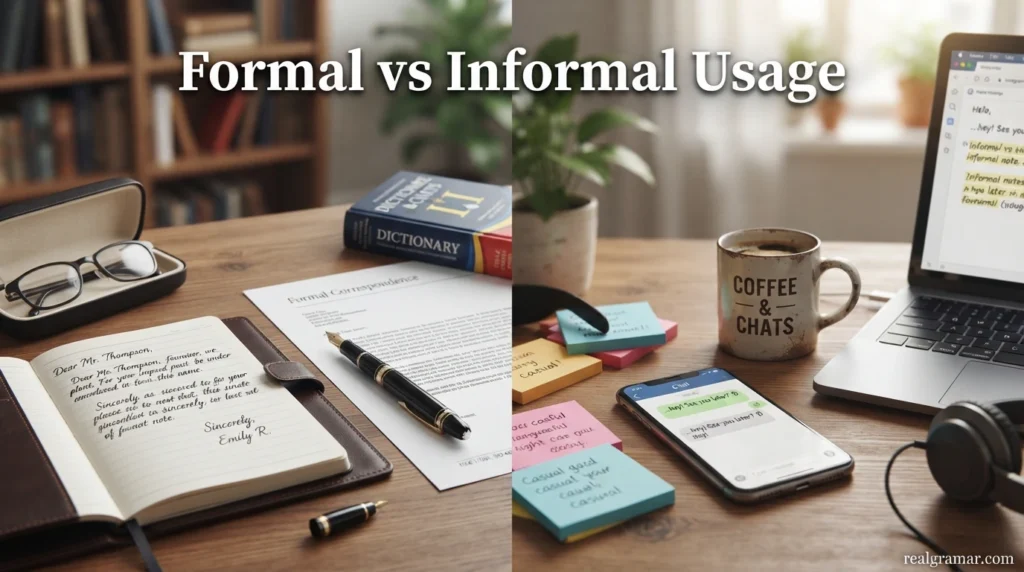
Different situations require different levels of formality.
| Situation | Best Choice |
| Business email | Looking forward to hearing from you |
| Job application | Looking forward to discussing the opportunity |
| Academic writing | Looking forward to your response |
| Friends | Can’t wait to see you |
| Family | Really excited about the visit |
| Social media | So excited for tomorrow! |
Choosing the right expression improves communication and creates the appropriate tone.
Common Sentence Patterns
Here are the most common grammatical structures.
Pattern 1
Looking forward to + noun
Examples:
- looking forward to the meeting
- looking forward to the event
- looking forward to the conference
Pattern 2
Looking forward to + verb + ing
Examples:
- looking forward to meeting you
- looking forward to working together
- looking forward to hearing from you
- looking forward to learning more
Pattern 3
Looking forward to + possessive adjective + noun
Examples:
- looking forward to your reply
- looking forward to your presentation
- looking forward to your visit
- looking forward to your feedback
These patterns appear frequently in professional English.
Why This Expression Sounds Polite
Politeness is one of its biggest strengths.
Instead of demanding action, it politely communicates optimism.
Compare:
Less polite:
- Reply soon.
More polite:
- I look forward to your reply.
Less natural:
- Tell me your decision quickly.
Better:
- I look forward to hearing your decision.
Small wording changes can make communication sound more respectful and professional.
Real-Life Examples
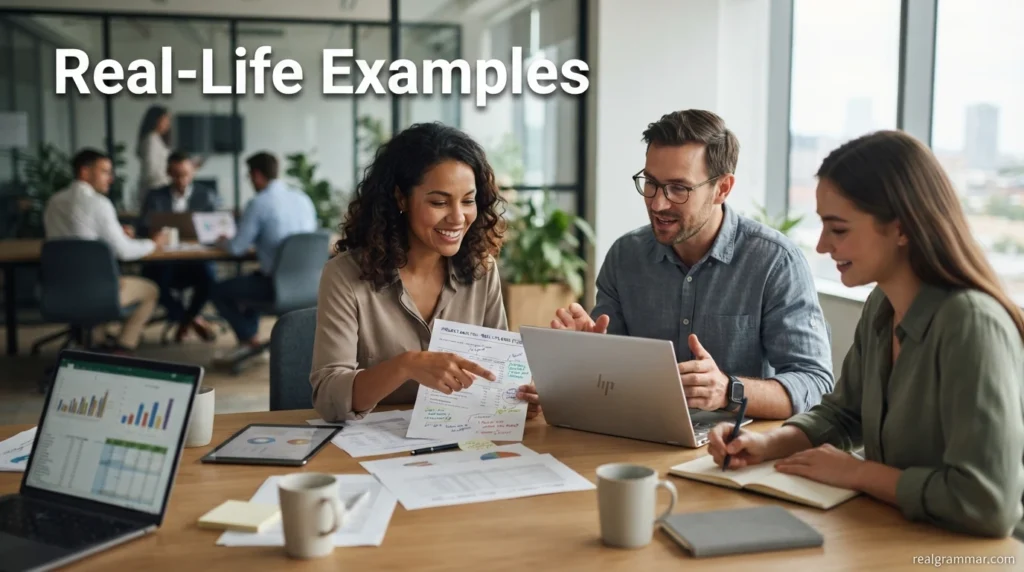
Example 1: After an Interview
Dear Ms. Johnson,
Thank you for taking the time to speak with me today. I enjoyed learning more about the role and your team. I look forward to hearing from you regarding the next steps.
Kind regards,
David
Example 2: Business Partnership
Thank you for your proposal.
We appreciate your detailed presentation and look forward to working together on this project.
Example 3: University Email
Dear Professor,
Thank you for answering my questions. I look forward to attending your lecture next week.
Best regards,
Emily
Example 4: Friendly Message
It was great seeing everyone today.
Looking forward to our next trip together!
Key Takeaways So Far
- The expression is grammatically correct.
- It communicates enthusiasm and positive expectation.
- “To” is a preposition, so it is followed by a noun or a gerund.
- It is appropriate in professional, academic, and personal communication.
- Adding “very much” increases emphasis but is optional.
- Using the correct structure makes your writing sound more fluent and polite.
Next Part: We’ll cover advanced usage, common mistakes, the best formal and informal alternatives, comparison tables, writing tips, eight SEO-focused FAQs, and a comprehensive conclusion.
Advanced Usage and Tone Differences
Understanding grammar is only the first step. Knowing when and how to express anticipation makes your writing sound more natural. The same idea can be communicated in different ways depending on the audience, relationship, and level of formality.
Formal Alternatives
In professional and academic settings, these expressions sound polished and respectful.
- I look forward to your response.
- I look forward to discussing this further.
- I look forward to meeting you.
- We anticipate a successful collaboration.
- We eagerly await your confirmation.
- I appreciate your time and look forward to hearing from you.
These alternatives are common in business emails, cover letters, proposals, and customer communication.
Example
Formal:
Thank you for considering my application. I look forward to discussing how my experience aligns with your team’s goals.
Neutral Alternatives
These work well in everyday communication without sounding too formal or too casual.
- I’m excited about…
- I’m eager to…
- I’m happy that…
- I’m anticipating…
- I’m pleased about…
Examples
- I’m excited about the workshop next week.
- We’re eager to begin the project.
- I’m pleased that we’ll finally meet in person.
Informal Alternatives
Friends and family often prefer simpler expressions.
- Can’t wait!
- So excited!
- Really excited!
- Looking forward to it!
- See you soon!
Examples
- Can’t wait to see everyone this weekend!
- So excited for the concert!
- Looking forward to our vacation!
These expressions sound friendly and conversational.
Common Mistakes to Avoid
Many English learners make similar mistakes when using this expression. Recognizing these errors helps improve both spoken and written English.
1. Using the Base Verb After “To”
❌ I look forward to meet you.
✅ I look forward to meeting you.
Remember: “to” is a preposition here, so use a gerund (-ing form).
2. Forgetting the Object
❌ I look forward to.
This sentence feels incomplete.
✅ I look forward to your reply.
✅ I look forward to hearing from you.
Always include the thing you are anticipating.
3. Overusing Intensifiers
Using too many emphasis words can make writing sound unnatural.
Less natural:
I am very, very, really, extremely looking forward…
Better:
I am really looking forward to meeting you.
or
I am very much looking forward to meeting you.
One intensifier is usually enough.
4. Using It in Negative Situations
This expression communicates positive anticipation.
Avoid sentences like:
❌ I look forward to the difficult conversation.
Instead, consider:
- I appreciate the opportunity to discuss the matter.
- I welcome the opportunity to resolve this issue.
Comparison Table
| Situation | Recommended Expression | Tone |
| Business email | I look forward to your response. | Formal |
| Job interview | I look forward to hearing from you. | Professional |
| Meeting a client | I look forward to meeting you. | Professional |
| School email | I look forward to your feedback. | Respectful |
| Friends | Can’t wait to see you! | Casual |
| Family | Looking forward to spending time together. | Warm |
| Social media | So excited for tomorrow! | Informal |
This table can help you quickly choose the most appropriate wording.
Benefits of Using This Expression Correctly
Mastering polite expressions has advantages beyond grammar.
1. Creates a Positive Impression
Professional communication should sound respectful and optimistic.
2. Shows Enthusiasm
It lets the reader know you value the future interaction.
3. Improves Email Etiquette
Many professional emails end with a polite statement of anticipation.
4. Builds Better Relationships
Positive language encourages cooperation and goodwill.
5. Strengthens Writing Skills
Learning natural expressions expands your vocabulary and helps you communicate more confidently.
Practice Exercises
Test your understanding by choosing the correct option.
Exercise 1
Choose the correct sentence.
A. I look forward to meet you.
B. I look forward to meeting you.
Answer: B
Exercise 2
Which is more suitable for a business email?
A. Can’t wait!
B. I look forward to your response.
Answer: B
Exercise 3
Fill in the blank.
We look forward to ________ with your team.
A. work
B. working
Answer: working
Exercise 4
Complete the sentence.
Thank you for your email. I look forward to ________ from you soon.
Answer: hearing
FAQs
1. Is this expression grammatically correct?
Yes. It is a standard English expression used to show enthusiasm or positive expectation about a future event.
2. Why does “to” take a verb ending in -ing?
In this expression, to functions as a preposition, not part of an infinitive. Therefore, it is followed by a noun or a gerund.
Correct:
- looking forward to meeting you
- looking forward to working together
Incorrect:
- looking forward to meet you
- looking forward to work together
3. Is it appropriate for professional emails?
Absolutely. It is one of the most common and polite ways to close business emails, thank-you messages, interview follow-ups, and academic correspondence.
4. Is adding “very much” necessary?
No. It simply adds emphasis.
Compare:
- I look forward to meeting you.
- I am very much looking forward to meeting you.
Both are correct, but the second expresses stronger enthusiasm.
5. Can I use it in spoken English?
Yes. Native speakers use it in both spoken and written English, although casual conversations often replace it with expressions like:
- Can’t wait!
- Really excited!
- Looking forward to it!
6. What are the best professional alternatives?
Some excellent options include:
- I appreciate your time.
- I eagerly await your response.
- I anticipate our discussion.
- I look forward to continuing our collaboration.
7. What is the most common mistake?
The biggest mistake is using the base verb instead of the -ing form.
Incorrect:
- look forward to meet
Correct:
- look forward to meeting
8. How can I sound more natural?
Choose an expression that matches your audience. Use formal wording for professional communication and relaxed wording with friends or family. Avoid unnecessary repetition and keep your message concise.
Conclusion
Expressing anticipation is an important part of effective communication. Whether you’re writing a business email, responding to a job interview, contacting a professor, or messaging a friend, choosing the right words helps create a positive impression.
This expression is grammatically correct and widely accepted in modern English. The key rule to remember is that “to” is a preposition, so it should be followed by a noun or a verb ending in -ing, such as meeting, hearing, or working. Using it correctly demonstrates confidence, professionalism, and strong language skills.
You don’t always need the added emphasis of “very much.” In many situations, a simpler phrase such as I look forward to hearing from you sounds equally natural and polished. By understanding the grammar, selecting the right level of formality, and avoiding common mistakes, you’ll be able to write emails, letters, and everyday messages that are clear, courteous, and effective.
As you continue improving your English, pay attention to how native speakers express enthusiasm in different contexts. Expanding your vocabulary with appropriate alternatives and practicing these sentence patterns will make your communication more fluent, engaging, and professional.
